The Speed of Business Has Changed. Has Your System?

There was a time when a good business could run on a few simple things: a phone, a notebook, a few loyal employees, a bookkeeper, a trusted banker, a customer list, and a reputation built one handshake at a time.
That world is not completely gone, but the speed of business has changed. The internet made information move instantly. The iPhone put that information in every customer’s pocket. Now artificial intelligence is turning that information into action, drafts, decisions, automation, and analysis faster than most businesses are prepared to absorb. Each wave did not simply add a new tool. It compressed the time between a customer having a question, comparing options, forming an opinion, and expecting a response. The internet changed access. The iPhone changed attention. Artificial intelligence is changing execution. That is why owner-led businesses cannot afford to operate with scattered information, slow follow-up, and disconnected systems. The market is moving faster because the customer is moving faster.
Work now moves through ten different doors at once. A customer sends a text. A lead comes through a website form. A team member posts an update in Connecteam. A referral partner sends an email. A meeting creates five action items. A spreadsheet tracks one part of the business, while the customer relationship management system tracks another. Social media creates awareness, but the follow-up lives somewhere else.
That is the new reality for business owners and working professionals. The owner is no longer only managing people, products, services, and customers. The owner is managing information flow, attention, software, follow-up, communication, and decision-making across a business that never really stops moving. The working professional feels the same pressure from a different seat. More messages, more meetings, more platforms, more expectations, more tools, more noise, and less clarity.
This is one of the biggest changes in how businesses work today. A professional is not only judged by effort anymore. They are judged by how well they organize information, communicate clearly, use tools intelligently, solve problems, and help the business move faster without creating more chaos. The old model rewarded people who could complete assigned tasks. The new model increasingly rewards people who can see the system, notice the gap, turn repeated problems into repeatable processes, and use artificial intelligence to improve the work instead of simply producing more of it.
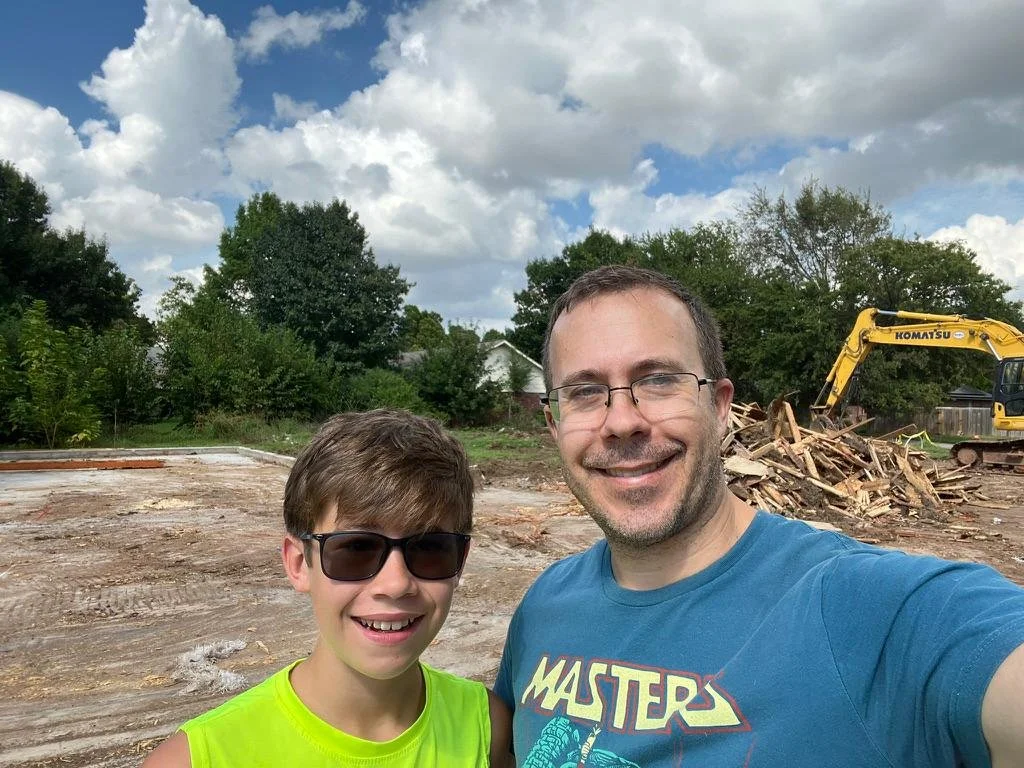
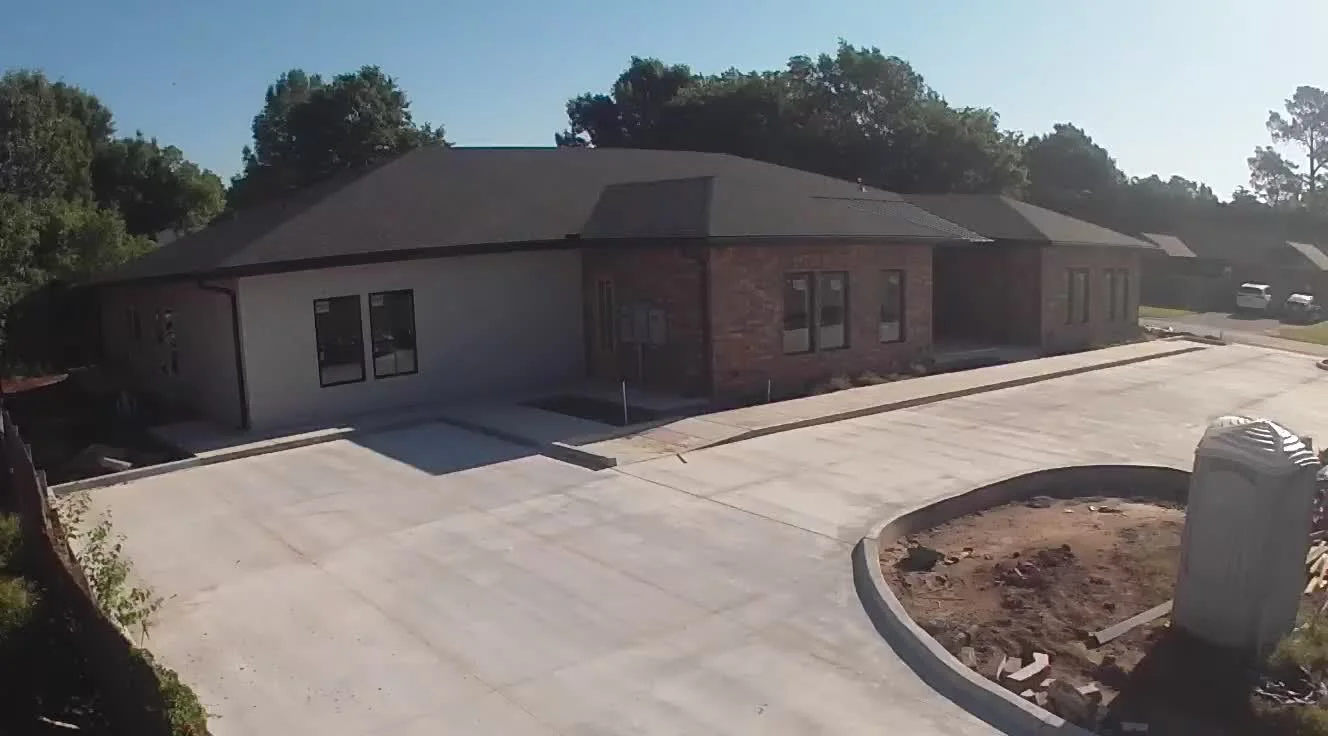
At BMD Investment Group, this lesson has become very practical. We are building around real businesses that serve real people. Legacy Senior Living serves families during one of the most important and difficult seasons of life. Melissa’s House is being built to expand that mission. Wellness Ways supports the operating structure behind the care. BMD Investment Group is focused on building a durable balance sheet through businesses, tools, and investments that create value for customers, communities, and investors.
But like many owner-led businesses, we have had to face a hard truth: a clear mission does not automatically create a clear operating system. You can care deeply about customers and still have information scattered everywhere. You can have a strong team and still lose follow-up. You can have good meetings and still fail to capture decisions. You can have great content ideas and never turn them into a system. You can have customer questions, referral opportunities, operational lessons, and investor insights moving through the business every week, but not connecting in a way that compounds.
That is how a business leaks value. Not usually through one dramatic failure, but quietly, slowly, one missed follow-up at a time. One unclear owner at a time. One spreadsheet that does not connect to the customer relationship management system. One message that never becomes a decision. One decision that never becomes an action. One action that never gets reviewed. The owner feels it first. Then the team feels it. Then the customer feels it. Eventually, the financial statements show it.
That is why the future of work is not only about artificial intelligence. It is about operating discipline. Artificial intelligence is changing fast. Energy markets are swinging violently. Software development is being transformed by tools like Codex. Companies like Anthropic, OpenAI, xAI, and others are fighting to define the next layer of work. Every week, a new headline makes it feel like the entire world changed before lunch.
Maybe it did. But the principles did not.
The newest tool does not remove the need for judgment. The fastest model does not remove the need for leadership. The best automation does not remove the need for trust. The sharpest dashboard does not remove the need to serve the customer.
This is where we keep coming back to Warren Buffett’s shareholder letters. Buffett’s letters teach a way of thinking that runs almost opposite of the modern internet cycle: be rational, understand the business, measure what matters, avoid unnecessary complexity, allocate capital carefully, think long term, work with people you trust, and build durable value.
That is not outdated thinking. It may be exactly what owners need right now. When the world speeds up, discipline becomes more valuable. When tools multiply, principles matter more. When everyone is chasing the next platform, the owner who understands the customer has an advantage.
That is the shift we are trying to make. We are not using artificial intelligence because it sounds impressive. We are using modern tools because families deserve better communication, customers deserve faster answers, team members deserve clearer expectations, referral partners deserve professional follow-up, managers deserve visibility into what is actually happening, investors deserve thoughtful reporting, and owners deserve a business that is not held together by memory, stress, and late-night catch-up work.
The goal is not to build a pile of software. The goal is to build a business operating system. A real operating system should connect goals, scorecards, issues, decisions, owners, and next actions. It should help the team answer a few basic questions every week: What are we trying to accomplish? How do we know if we are making progress? What issue is blocking the work? What decision needs to be made? Who owns it? What happens next?
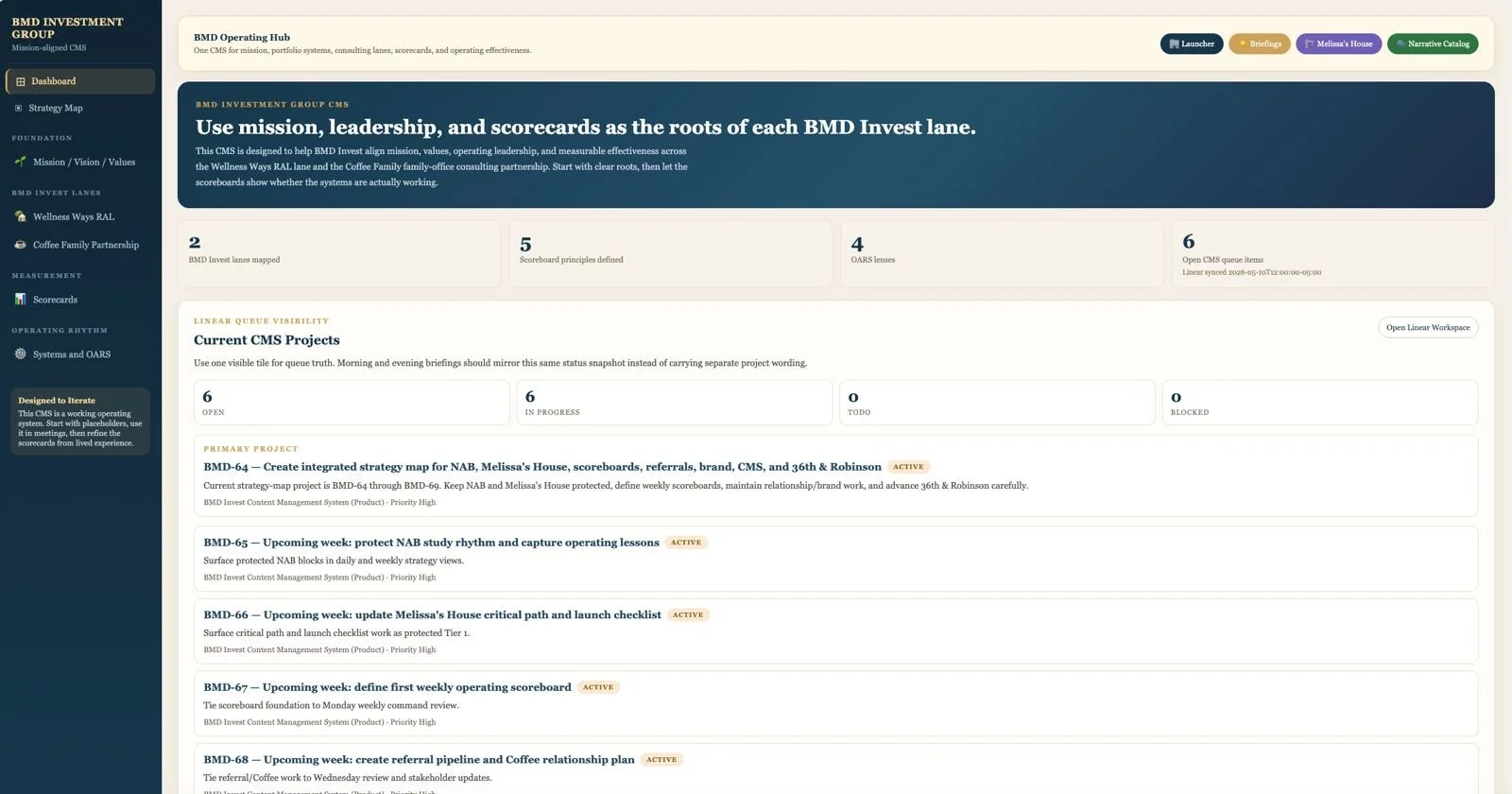
This is where Gino Wickman’s Entrepreneurial Operating System gives a practical foundation. Vision, people, data, issues, process, and traction are not abstract ideas. They are the bones of a business. Without them, the business depends too much on the owner’s memory and the team’s good intentions.
But in today’s environment, we also need to go one layer deeper. The business has to model reality.
That is the useful lesson from Palantir-style thinking. A serious operating system should not just store data. It should connect data to real decisions. It should help the business understand the actual objects and relationships that create value: customers, families, leads, referral partners, team members, content, meetings, issues, projects, financial metrics, follow-up actions, and service outcomes. Those things should not live in separate worlds. They should connect.
A customer question should become a content idea. A content idea should become an educational asset. An educational asset should support a sales conversation. A sales conversation should create follow-up. Follow-up should be owned by someone. The outcome should be reviewed. The lesson should improve the system. That is how normal work becomes better action. That is how scattered information becomes business intelligence. That is how a business starts building durability.
For working professionals, this creates a new opportunity. The valuable employee in this new environment is not the person who simply says, “Tell me what to do.” The valuable employee learns to ask better questions. What decision are we trying to make? Where does the information live? Who needs to know this? What should be documented? What should be automated? What should remain human? What would make this easier next time?
That kind of professional becomes more valuable, not less valuable, in a world of artificial intelligence. Artificial intelligence can draft, summarize, organize, search, compare, and create a first version. But it still needs a person with judgment, responsibility, and care to turn the output into real value. That is where owners and professionals should focus. Not on fearing the tools. Not on worshiping the tools. On using the tools to become better stewards of the work

That is the story we are trying to live at BMD Investment Group.
We are taking a fragmented business environment and forcing it into a weekly rhythm. We are using tools to organize the work. We are using artificial intelligence to draft, summarize, structure, and improve. We are using customer relationship management principles to strengthen relationships. We are using content systems to educate families and business owners. We are using scorecards to tell the truth. We are using meetings to make decisions, not create more noise. We are trying to turn every week into a better version of the business.
That is how a business moves from scattered revenue to durable value. It stops depending only on effort and starts building systems. It stops chasing attention and starts earning trust. It stops treating content as random posts and starts treating content as customer education. It stops treating data as a report and starts treating data as a decision tool. It stops treating employees as task completers and starts developing professionals who can think, communicate, and improve the system.
That is the future of work for owner-led companies. The business owner has to become a better capital allocator. The working professional has to become a better problem solver. The team has to become better at turning information into action. The company has to become better at serving the customer. The tools should support that mission. If they do not, they are just noise with a monthly subscription.
The world will keep changing. Oil will swing. Artificial intelligence companies will trade places. Codex will improve. Anthropic will improve. OpenAI will improve. Elon will make another move. Another tool will launch. Another headline will make everyone feel behind.
But the owner still has to ask the same questions on Monday morning: What matters this week? Who are we serving? What number tells the truth? What issue needs to be solved? What decision needs to be made? Who owns the next action? How does this build durable value?
Those questions are not flashy, but they are useful. And useful wins.
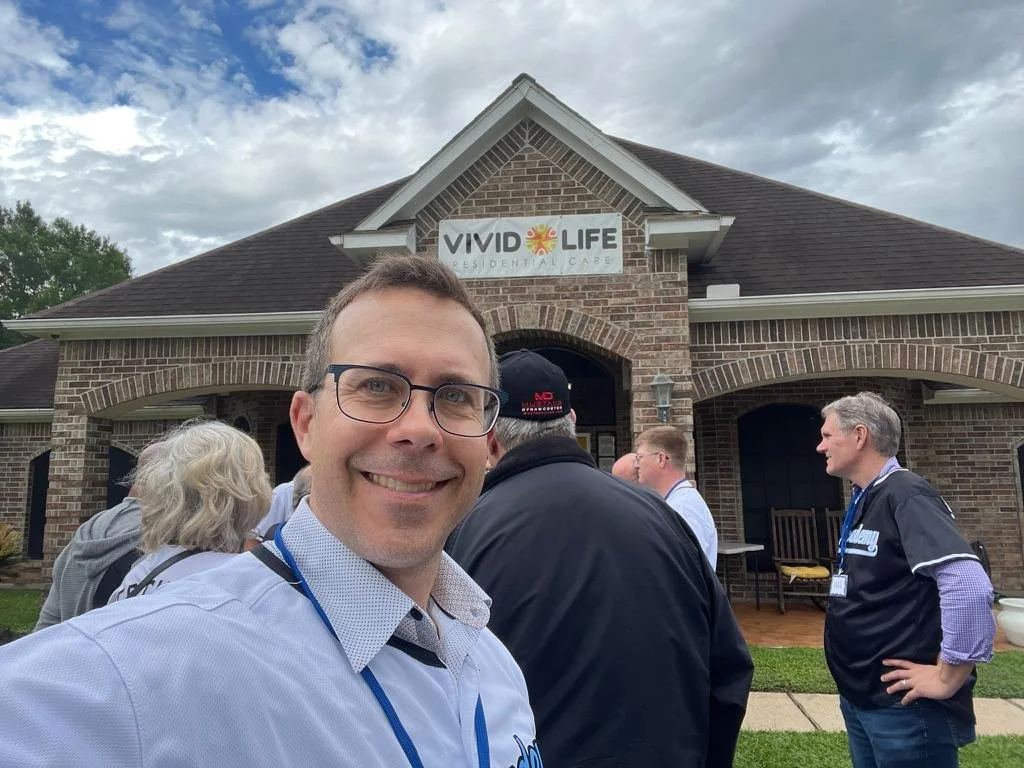
At BMD Investment Group, we are documenting this process because we believe the next generation of owner-led businesses will need more than motivation. They will need operating systems that help them serve customers, develop professionals, allocate capital, and build balance sheet durability. We are building, learning, and applying these lessons inside our own companies first.
If your business feels scattered across meetings, texts, spreadsheets, email, customer relationship databases, messaging applications, and disconnected software, start by mapping the decisions your team makes every week. Then map the information required to make those decisions. Then assign an owner. Then define the next action. That is where clarity begins.
And if you would like to learn more about the content management system we are building, or if you are interested in building balance sheet durability through tools, businesses, and investments designed to do good and do well, reach out to BMD Investment Group.
We are not chasing hype. We are building systems around service, stewardship, and long-term value.